Education & Insights
Packaging Guidelines: How to Keep Your Shipments Safe

Kay Kathambi
—
7 minutes
Packaging Guidelines: How to Keep Your Shipments Safe
Shipping your products shouldn’t be stressful but it can be if your packages aren’t prepared properly. Following packaging rules ensures your shipment is accepted, arrives safely, and qualifies for insurance if anything goes wrong.
Here’s how to get it right.
1. Know Your Shipment Type
Different items need different protection. Pack accordingly:
Fragile Items – TVs, glassware, electronics, home appliances → Use bubble wrap, foam, corner guards, and double-wall boxes.
Non-Fragile Items – Clothes, books, shoes, accessories → Poly mailers or single-wall boxes work fine.
Liquid Items – Detergents, oils, toiletries → Leak-proof containers, sealed liners, and absorbent padding.
Bulky / Heavy Items – Furniture, machinery → Crating, strapping, or shrink-wrapped pallets.
Tip: Always pack based on the item, not convenience.
2. Use the Right Materials
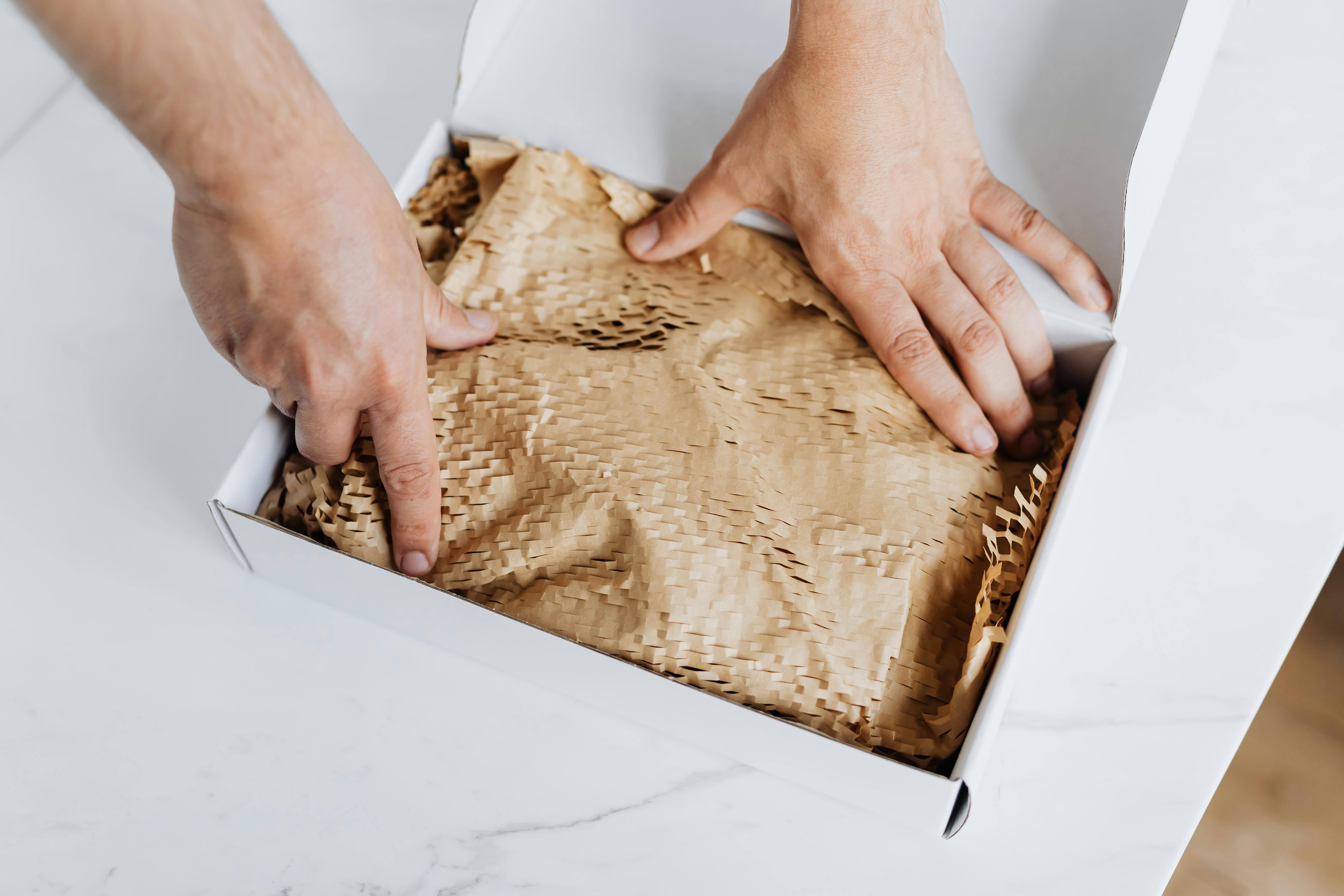
Primary Protection – Bubble wrap, foam inserts, shrink film (protects the product itself
Secondary Protection – Corrugated boxes, molded trays (absorbs shocks)
Tertiary Protection – Pallets, stretch wrap, strapping (protects during handling and stacking)
Support Materials – Tape, labels, silica gel, waterproof pouches (sealing and documentation)
Skipping a layer increases the risk of damage. Don't do it.
3. Step-by-Step Packaging
Step 1: Prepare Your Product
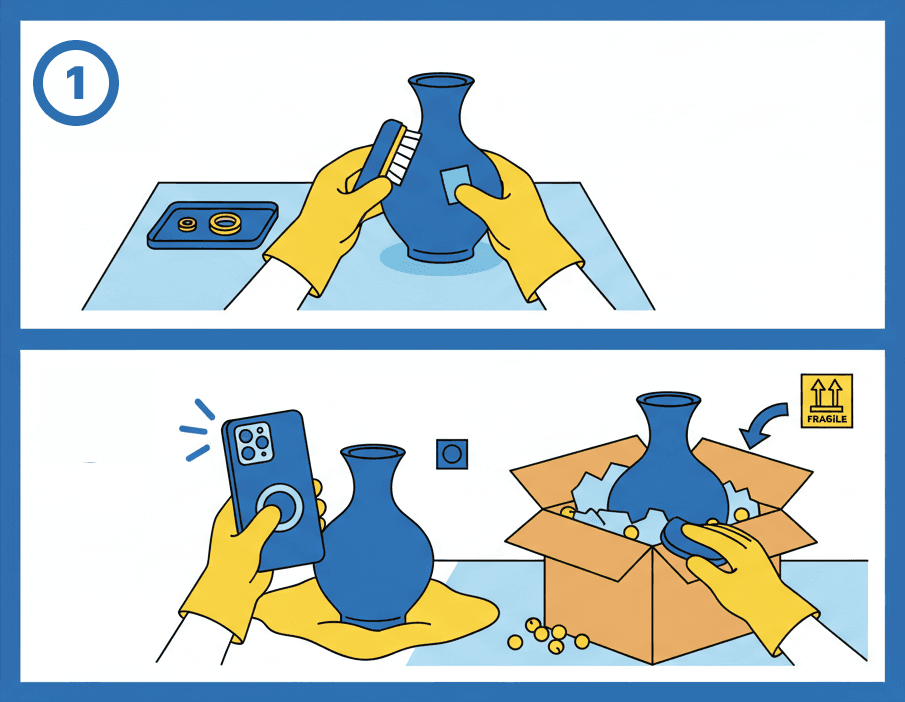
Check the item for damage.
Remove stickers or loose parts.
Take photos for insurance purposes.
Step 2: Inner Packaging
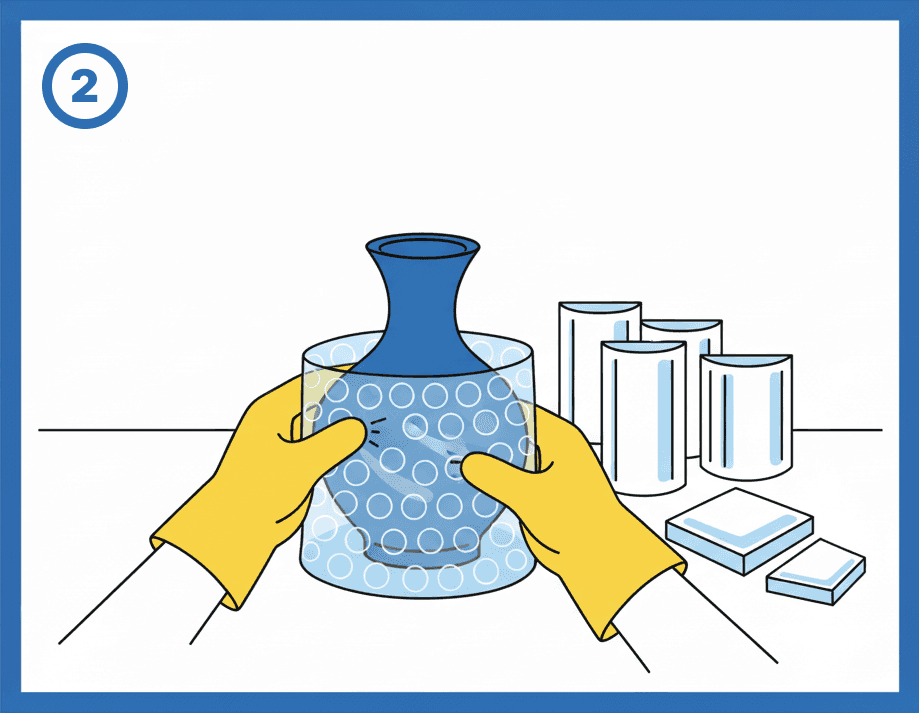
Wrap your product with protective materials.
Add padding for electronics and fragile items.
Secure detachable parts separately.
Step 3: Outer Packaging
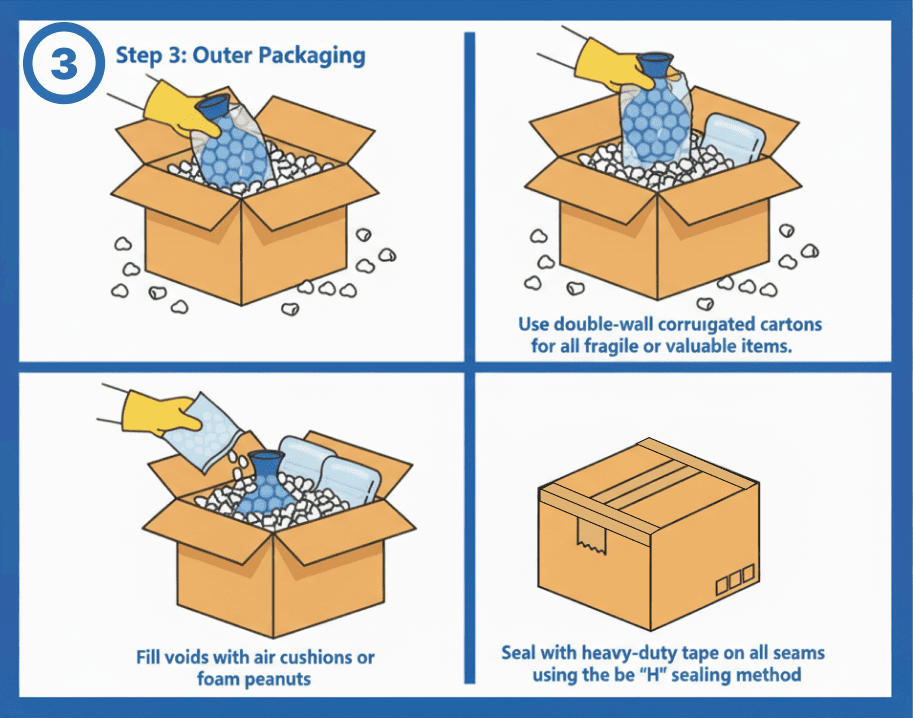
Use double-wall cartons for fragile or valuable items.
Fill empty spaces completely with foam or air cushions.
Seal all seams using the “H” method.
Step 4: Label Clearly
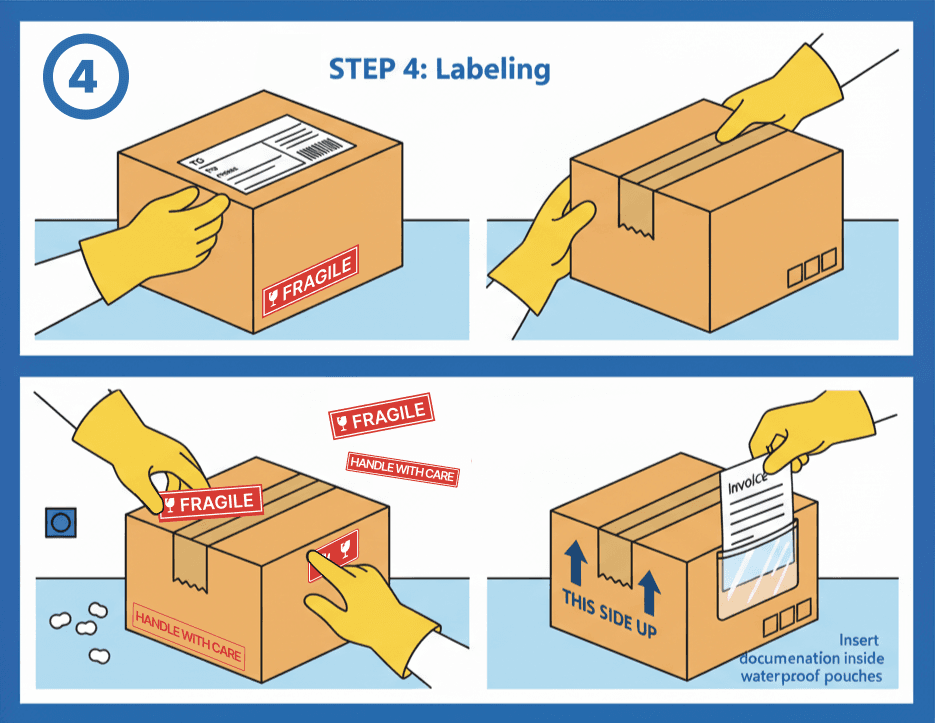
Place the shipping label on a flat surface.
Use “FRAGILE,” “HANDLE WITH CARE,” or “THIS SIDE UP” stickers as needed.
Include invoices or delivery notes in waterproof pouches.
Step 5: Final Check
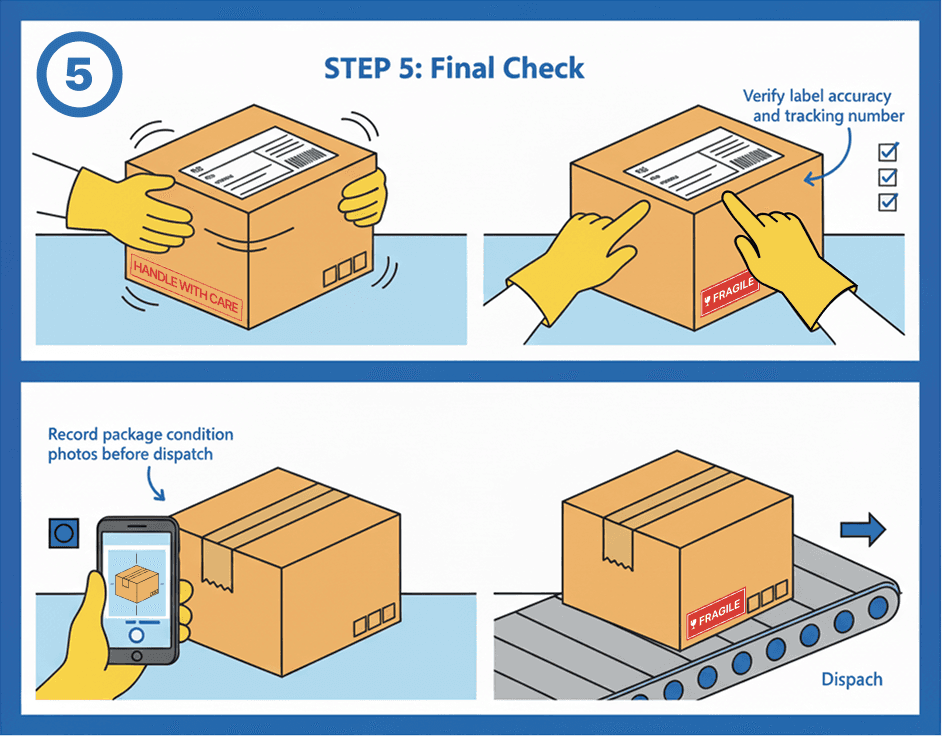
Shake test the package, nothing should move inside.
Verify the label details (address, contact, tracking number).
Take a final photo of the package.
4. Quick Quality Checklist
Before you send your shipment:
✔ Correct packaging materials used
✔ Proper sealing (no exposed edges)
✔ Weight evenly distributed
✔ Label clear and readable
✔ Product photos attached for traceability
Good packaging protects more than your product. It protects your customer experience, your brand, and your ability to make claims if something goes wrong.
Follow these steps your shipments will arrive safe, every time.